For Parents & Caregivers
Supporting adults in talking with children and reinforcing messages at home.
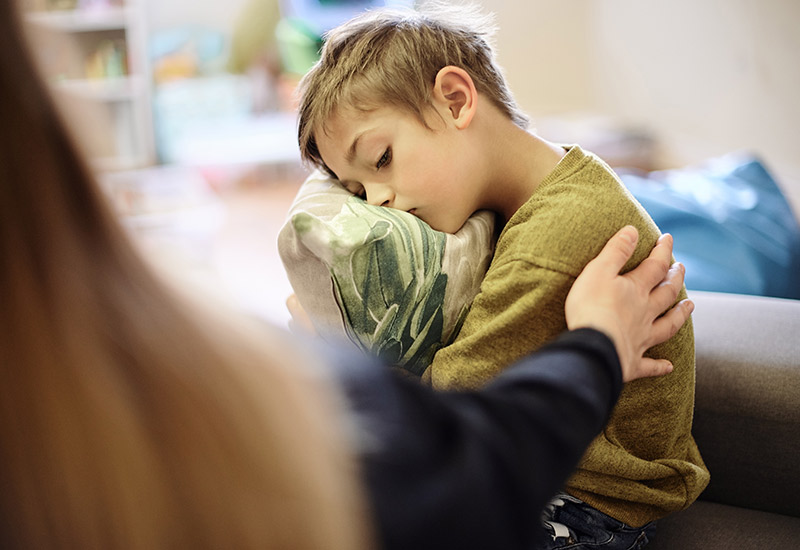
What if my child tells me they have been abused?
How do I start the conversation with my child?

Unsafe Online Behaviors
Brave Boundaries covers body and relationship boundaries appropriate for ages PreK-6th grade, which includes individualized curricula at every grade level. Abuse is discussed in a generalized way with younger children (pre-K-2nd), while types of abuse are discussed to help children in grades 3rd-6th identify and communicate situations with their trusted adults.
Brave Boundaries does not teach anatomy or sex education, nor does the curriculum use the names of anatomical body parts at any grade level. These areas of the body are referred to collectively as “private parts” or “parts usually covered by a bathing suit.” We encourage parents to begin education with their children on these basic terms and determine when their child is developmentally ready to discuss other topics involving sexual health, such as reproduction, puberty, masturbation, and sexual relationships and expectations.

What do I do if my child tells me they have been abused?
Every adult is a mandated reporter!
This means any adult who suspects or knows about the abuse or neglect of a child is required by law to make a report. If a child discloses abuse to you, here are a few tips to consider.
Listen
Stay calm. Please do not panic or react with emotion. Just listen to what the child has to say and refrain from asking the child further questions. The child has chosen you as their trusted adult, and your response is critical to the next steps to provide safety and healing.
Support
After the child has shared what happened, thank them for sharing with you. Believe what the child said, reassure them you will help, and acknowledge their courage for telling you.
Report
Call the Indiana DCS hotline (1-800-800-5556), or if the child is in immediate danger, call 9-1-1. Do not call with the child present. Answer the questions as best you can, even if you do not know certain information. Do not ask the child further questions. It is the responsibility of DCS and law enforcement to investigate and ensure proper procedures are followed.
How do I start having conversations with my child about safety?
Start early by using simple, age-appropriate language, like teaching your child correct anatomical terms and explaining that the “bathing suit area” is private and belongs to them. Reinforce that they always have the right to say “no” to any touch that makes them uncomfortable—even from familiar adults—and encourage them to speak up immediately if they feel unsafe. Frame body safety as an ongoing, everyday topic—not a one-time “talk”—and look for teachable moments during daily routines like dressing, bathing, or watching shows together. Role‑play scenarios to help build confidence and normalize the conversation, and let them know they’ll always be believed and supported if they ever feel unsafe. For more information specific to ages and development, visit the National Child Traumatic Stress Network.
Below are two great resources for your family:
General Parent FAQs
What are the types of abuse my child may experience?
There are five primary forms of child abuse. These include physical, sexual, emotional, neglect, and bullying. These forms of abuse can occur through contact or non-contact means, including online communications.
The Child Welfare Information Gateway has an excellent resource explaining the various forms for child abuse and neglect. What is Child Abuse and Neglect?
What are children’s rights when it comes to abuse?
State and federal laws outline the rights of children, including living free from abuse and neglect. These rights ensure the well-being, development, and safety children need to grow into healthy adults and reach their fullest potential.
The Child Welfare Information Gateway provides a description of children’s rights. Children’s Rights
Is corporal punishment considered abuse?
While Indiana does not prohibit the use of spanking or physical discipline on a child, parents should be aware that the use of unreasonable force that results in injuries and excessive force for the child’s age, behavior, parental intent, and desired outcome may be considered abuse. When determining the use of discipline, consider the child’s age, developmental level, and the desired behavior. Corporal punishment and/or spanking usually provokes fear to gain compliance through physical force, while communication on parental expectations and boundary setting helps children gain a cognitive understanding of the consequences of their actions.
What if my child’s behavior resulted in the abuse? For example, what if my child wanted to have a sexual relationship with an adult?
Sexual relationships between adults and children are never legal or appropriate. Even in situations where there is no sexual contact (sharing of photos or discussing sexual acts), adults are prohibited in these types of communication with children (anyone under the age of 17). Children and teens should be aware that a person may not be honest about their actual age, and at the same time, avoid giving an incorrect age to others. Keep in mind that abuse is not the child’s fault; the adult involved must take responsibility for inappropriate actions toward minors. If a child becomes involved in a relationship with someone older, it is important to discuss the legal implications for the relationship, as the child would not want their “friend” to get into trouble as a result of continuing a romantic relationship with a minor.
I don’t see my child as at risk of abuse. We have good friends and family, as well as good communication.
One in ten children will be abused before they turn 18. Even with positive family relationships, there are situations where perpetrators use their trust, authority, and goodwill to take advantage of children. These situations often involve the entire family or even community, feeling betrayed by the abuser once their misdeeds are uncovered. Not only is the child groomed by the abuser through special attention and gifts, but others are compelled to trust the abuser by accepting their kindness, generosity, and helpfulness. These acts keep both the child and others quiet and unsuspecting of their harmful behaviors. The National Children’s Alliance provides additional information regarding statistics on child abuse and grooming behaviors commonly used. National Statistics on Child Abuse – National Children’s Alliance
What are healthy and unhealthy behaviors of adults, peers, and older children around my child? How can I help my child understand these?
Healthy behaviors between children, their peers, older children, and adults resemble kind, caring, and trusting relationships, where respect is mutual, boundaries are respected, and the power balance is appropriate for the dynamic relationship. Unfortunately, unhealthy behaviors can also look like healthy behaviors. For example, an older child who helps take care of younger children but oversteps personal boundaries by touching the private parts of the child during a game. Or perhaps a family friend who gives rides and buys expensive items for a child whose parent works late but takes advantage of the time alone with the child by showing them pornography. Situations that place children alone or with little supervision may provide opportunities for abusers to take advantage of their authority and trust. Together, parents, caregivers, schools, and child advocacy centers can help provide child abuse prevention education to start these important conversations with children and empower all adults to take responsibility to ensure their safety.
Why didn’t my child disclose abuse to me?
Children who have been abused usually do not disclose the abuse in one event. Instead, small details of information may be shared with others over a course of days, weeks, or even years. In situations where the child knows the abuser due to familial or social connections, they may try to determine who to tell through slowly revealing details to see the reaction they receive from others. If the child feels the reaction is safe and supportive, they may choose to disclose further details in order to gain help. However, if the child feels that they are not believed or will not be supported in order to gain safety, they may delay disclosure until they feel safe enough to do so, if ever. Children may also consider the relationship of the abuser to their circle of trusted adults. If the abuser is close to the primary caregiver, such as a romantic partner of a parent or family member, they may choose someone to disclose to who is not directly involved, such as a grandparent, family friend, or school counselor.
For more information about the process of disclosure, Sexual Abuse Disclosure | NCACIA Protection.
What is normal sexual development and behavior?
Children are naturally curious, especially about their bodies. Providing children with age-appropriate information and anatomical language can help establish healthy body boundaries from an early age. However, it may be hard to distinguish between curiosity and potentially problematic behaviors. It is recommended to consult with your child’s primary care physician regarding questions about their development and behavior.
The National Child Traumatic Stress Network has provided a helpful resource for parents regarding Sexual Development and Behavior in Children.
What do I do if my child exhibits unusual sexual behavior?
It is always recommended to consult with your child’s primary care physician regarding questions or concerns regarding their sexual development and behaviors. In addition, Stop It Now provides a useful website for youth and young adults to seek answers regarding appropriate sexual behaviors and resources for help with concerns. What’s OK?
For children exhibiting problematic sexual behaviors, help is available within the Holly’s House community. Contact Holly’s House to learn more.
- Problematic Sexual Behaviors – National Children’s Alliance
- Understanding and Coping with Sexual Behavior Problems in Children: Information for Parents and Caregivers | The National Child Traumatic Stress Network
What if my child is being bullied?
Bullying behaviors, such as physical aggression, verbal threats, insults, and exclusion, may be used between children of similar age groups either in-person or online. These behaviors are repetitive, involve a real or perceived power imbalance, and are often increasingly aggressive in nature. While adults play an important role in providing safety and monitoring of bullying, these behaviors are often displayed outside of their view. Teaching children how to stand up for themselves and others who experience bullying and to seek help from trusted adults can decrease these behaviors and situations. Adults should consider increasing monitoring of physical areas of concern, such as hallways and stairwells of school buildings or youth centers. Creating environments of safety and community can also help decrease incidents of bullying.
Encourage your child to talk with you or another trusted adult when they experience bullying behaviors themselves or see others in these situations. It is not encouraged to allow children to physically intervene or return verbal insults and threats. These methods rarely solve the problem and increase a child’s risk of being injured or facing consequences from school personnel and law enforcement.
Stop Bullying provides resources for adults and youth on how to engage as a bystander, cyberbullying, and other forms of harassment. StopBullying.gov
What are the signs of abuse?
Children may experience an array of signals indicating potential abuse. Some of these signals include withdrawing or avoiding others, secret keeping, suddenly having large amounts of money or new items, increased risk-taking, rule-breaking, and changes in academic success. Some children may experience physical symptoms such as stomachaches, vomiting, headaches, increased anxiety, heart palpitations, panic attacks, difficulty eating or sleeping, and regression in developmental milestones. While these changes do not always indicate abuse, they could be signs of traumatic stress or another medical condition that needs to be evaluated by their primary care physician.
Traumatic stress in children can affect the way they think, feel, and behave. These reactions can vary depending on the age of the child and the type of trauma experienced. These behaviors may include changes in the child’s sleep patterns, social engagement, reactions to stressors at school, hypervigilance, decreased interest in activities, and avoidance of people, places, or things that remind the child of the traumatic experience. However, every child reacts differently to traumatic stress, and changes in behavior are not always an indicator that a child has been abused.
- About Child Trauma | The National Child Traumatic Stress Network
- PTSD in Children and Adolescents – PTSD: National Center for PTSD
How do I promote empowerment?
Empowerment starts with early and frequent conversations with children about boundaries and safety. During preschool years, parents can teach children the anatomical names of their body parts and how these parts are covered by a bathing suit. Teaching children how to say “no” to unwanted touches, such as hugs, kisses, and tickles, empowers them to take control of their bodies and confidently communicate boundaries. School-aged children can continue developing boundaries by role-playing situations concerning personal space, unwanted touches, secrets versus surprises, and seeking help from trusted adults. Parents should consider the different situations their child encounters regularly with peers, family members, and other adults. Teens and parents should discuss mutual respect and consent in friendships and relationships. These discussions should include open communication regarding situations that place the child in uncomfortable, coerced, or manipulative positions and promote seeking help from a trusted adult when these boundaries are not respected or when their intuition is telling them something is not right. Navigating difficult situations around boundaries, regular communication, and role-playing helps build confidence and independence as your child grows into adulthood.
What language should I use to discuss body parts?
While Brave Boundaries does not cover anatomy, researchers indicate that teaching your child medical terms for body parts is the best way to empower your child to see their bodies as functional and purposeful. Utilizing anatomical language for body parts allows your child to communicate with you, medical staff, and abuse professionals, should abuse occur.
Just as you teach your child the names for major body parts, such as arms, legs, head, ear, nose, etc., when they are preschoolers, your child should learn the appropriate names for the private parts of their own gender, and of the opposite gender as well, including chest, breast, vulva, vagina, buttocks, anus, penis, and testicles.
Child Safety App Information
App Name
Cost
Benefits
Bark

$15.00/Month
Location, alerts, walking, biking, or driving.
Block categories or specific apps.
Monitors texts and emails.
Covenant Eyes/Victory Shield

$18.00/Month
Monitoring program designed to help families safeguard children from explicit and unsafe internet content through smart filtering and activity reports.
Qustodio

$54.95/Year -Basic
$99.95/Year – Advanced
Games and app blocking.
Basic – Time limits, web filter, and location.
Advanced – Social media monitoring, custom routines, app insights, calls and messages.
Aura

$10.00/Month for kids
$32.00/Month for family
Day and night online activity, pause on the internet.
Social intercations.
Recommendations
Content Filter site block.
Screen time limit.
Troomi
Start at $19.95/Month
Full message monitoring.
Prevention space- no unwanted website, no bullies, no predators, no social media, no unwanted calls.
Awareness- can respond in real time.
No harmful games.
Parent Resources.
Norton Family

$49.99/Year
Child search terms.
Viewed videos.
Age appropriate content.
Screen limits.
Explore internet safety.
Online Parent FAQs
I am limiting my child’s access to technology to end abuse. What should I know?
Although limiting a child’s access to technology may seem like the best solution to preventing potential abuse, it is not always the best answer. Completely eliminating access to technology is not practical for today’s kids and solutions should be focused on teaching children how to safely navigate technology. Much like parents teach their child how to drive for the first time, the same approach should be considered for using technology. Start by modeling desired behaviors and sitting along side your child as they learn how to use different types of devises and applications before allowing your child free access to technology use. Creating limits around usage, such as apps and websites they can use along with how long they are allowed to use the device are another example of teaching children safe and healthy technology use.
Parental control apps, such as Bark, Aura, and eyeZy are popular software tools that can help alert parents to concerning conversations and searches, and provide increased monitoring of devices. However, these apps can be expensive and are not always 100% secure, as savvy children may find work arounds.
For up to date information regarding online safety, the Internet Crimes Against Children Task Force (ICAC) and the Nation Center for Missing and Exploited Children (NCMEC) provide excellent resources for families.
- Internet Crimes Against Children Task Force Resources Internet Safety – ICAC
- NCMEC Online Safety Tips Resources
How do I install parental controls on my child’s devices?
Navigating new technology is challenging. While we review several apps you may install on a device, each device has options for parental control settings which can also be utilized.
Think of your child’s device protection in the following terms:
- Create personal rules and limits for use. Utilize our Family Digital Safety Plan to start the conversation.
- Set controls on your home Wifi and discuss which locations outside of your home might be acceptable to utilize Wifi.
- Set controls on your child’s device.
- Continue to monitor your child’s use of social media and Apps.
We recommend the site Protect Young Eyes for specific and updated information including Amazon, Apple, Google, Kindle, Macbook, Nintendo, Oculus, Playstation, Roku, Smart TV, Wifi Router, WindowsPC and XBOX devices.
What are healthy online behaviors?
Healthy online behaviors reflect healthy offline behaviors. Using respectful language, expectations on sharing information and photos, and asking permission before sharing or posting about others are great starting points for teaching children how to be good digital citizens. Some good tips are stopping to reflect on how the information may be used, who can see the information, would you want this information shared with others, etc. The Golden Rule applies online, too!
Is it ok for my child to talk with people they do not know online? Can I keep this from happening?
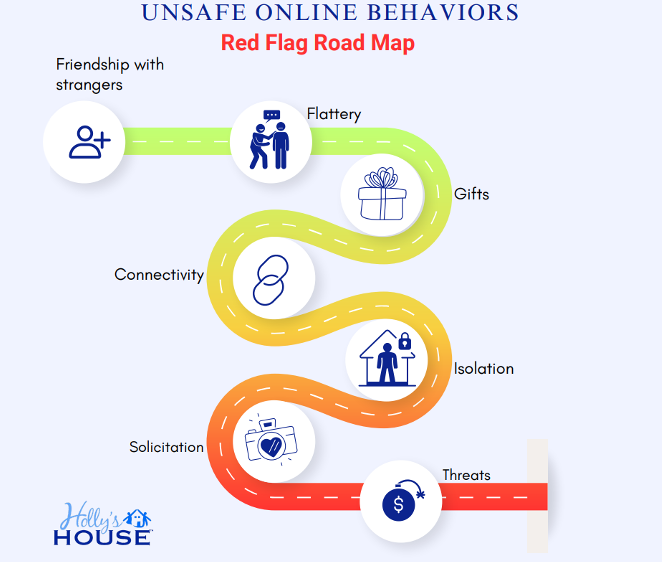
It’s difficult to know exactly who we are contacting online. Even if the account seems legitimate, verified, or trustworthy, scammers have become savvy at creating accounts that look like the real one. Scammers have even recreated “friend lists” to appear real. It’s best to keep online profiles and accounts as private as possible and only follow or allow follows from people you or your child knows in real life. Avoid accepting friend requests or online messages from people you do not know or cannot confirm their identity. It is difficult to keep others from sending these types of requests, no matter how private or secure an account may be. In addition, beware of the age requirements for profiles and accounts for social media, video content creation, gaming, and chat apps. Many require a minimum age of 13, while others are 18 and up. There are reasons for this, including the inability of the platform to completely control the content accessed by children who are underage. Online Enticement
What if my child is being bullied online?
Cyberbullying is just a concerning as in-person bullying. However, since these behaviors are often target, they may not be noticeable to others, especially if messages are sent directly instead of shared publicly or in a group. The National Center for Missing and Exploited Children (NCMEC) is the leader in providing online resources for parents, caregivers, and youth on issues such as online bullying and exploitation. Cyberbullying
What do we do if our child comes to us and tells us they shared photos with someone online?
First, stay calm and thank your child for telling you. That took courage.
- Do not shame or punish them — that could make them hide future issues.
- Gather information: Who was it sent to? What kind of photos? Was there any pressure or threats involved?
- Do not delete anything — screenshots and messages may be important if authorities need to investigate.
- Report it: You can contact your local police, the National Center for Missing & Exploited Children (NCMEC) CyberTipline (cybertipline.org), or the app/platform directly.
Get support: Children can experience intense guilt or fear; a school counselor or child therapist can help.
How do we handle kids allowing people they don’t know to be their “friends” online?
This is a common challenge.
- Set clear family rules: Only accept requests from people they know in real life.
- Review their privacy settings together on all apps.
- Model the behavior: Show your own online boundaries.
- Talk, don’t just police: Ask, “What made you want to add them?” instead of “Why did you do that?”
Use parental controls (with transparency) to receive alerts about new connections.
If my child sends online photos of himself, is that a crime?
It depends on the type of photo and the laws where you live:
- If the photos are sexually explicit and your child is a minor, even self-created images can legally be considered child sexual abuse material (CSAM).
Many states have “sexting laws” that treat minors differently — often as needing education, not prosecution — but this varies.
If this has happened, don’t panic: reach out to law enforcement or a youth legal resource for guidance before deleting or sharing evidence.
What about online bullying? Do we report that?
Yes — start by documenting and reporting it.
- Save evidence: screenshots, timestamps, usernames.
- Report it to the platform (Instagram, Snapchat, TikTok, etc. all have reporting options).
- Contact the school if the bullying involves classmates. Schools often have anti-bullying obligations.
If threats or explicit images are involved, contact the police.
Can I be held legally responsible for what my child does and says online?
Usually, not criminally, unless you knowingly allow or help it happen.
However, parents can face civil liability (lawsuits) if their child harasses or defames someone, or causes harm.
That’s why monitoring, setting limits, and educating your child are important.
When I reported a situation with a kid texting photos to the police, they didn’t do anything. Why? And what can we do next, call the police again?
That’s frustrating but common.
- Police may not act if the photos don’t meet the legal threshold for CSAM or if the sender/receiver are minors.
- Still, follow up: ask for a case number and whether it was referred to a cybercrimes or juvenile division.
You can also contact the CyberTipline (1-800-843-5678 or cybertipline.org) or your state’s attorney general’s Internet Crimes Against Children (ICAC) Task Force.
Persistence matters.
I know people say that what you put on social media lasts forever, but is that true? What if you shut off an account?
Mostly true.
Even if you delete an account, posts can remain in:
- Backups or archives on servers
- Screenshots or downloads by others
Search engine caches for a time
Deleting does reduce visibility, but nothing online is ever truly gone — that’s a good lesson for kids.
Is there anything we can do without spying on our kids? I want to create an atmosphere of trust with my child.
Absolutely. That’s the healthiest approach.
- Keep communication open: Talk often about what’s happening online — normalize it like talking about school.
- Use “trust and verify”: Let your child know you’ll check occasionally, not secretly.
- Set shared expectations: Create a written Family Tech Agreement (for Parent + Child to Sign)
- Teach critical thinking: Ask how they decide what’s safe or not.
Model good digital behavior yourself.
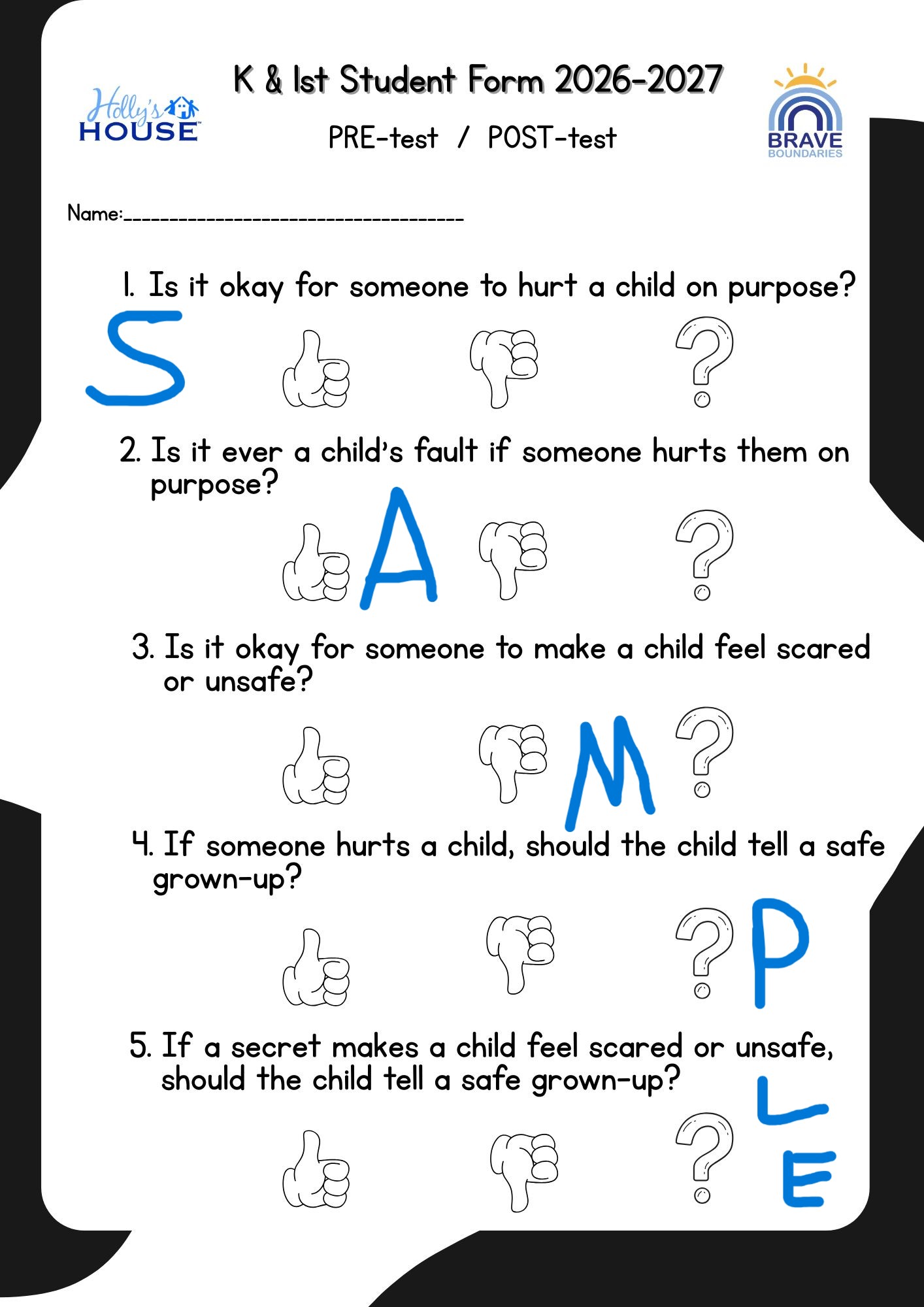
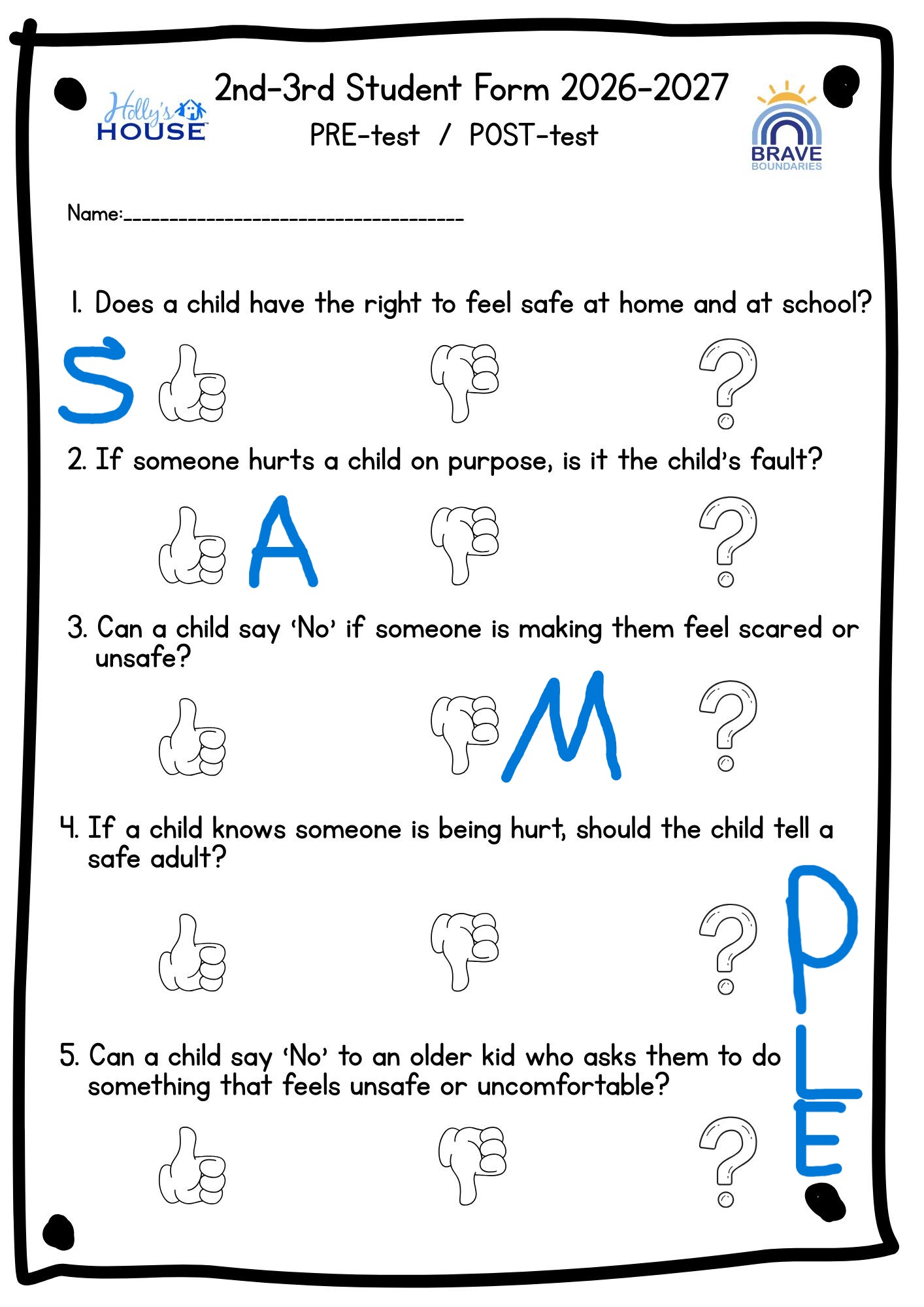
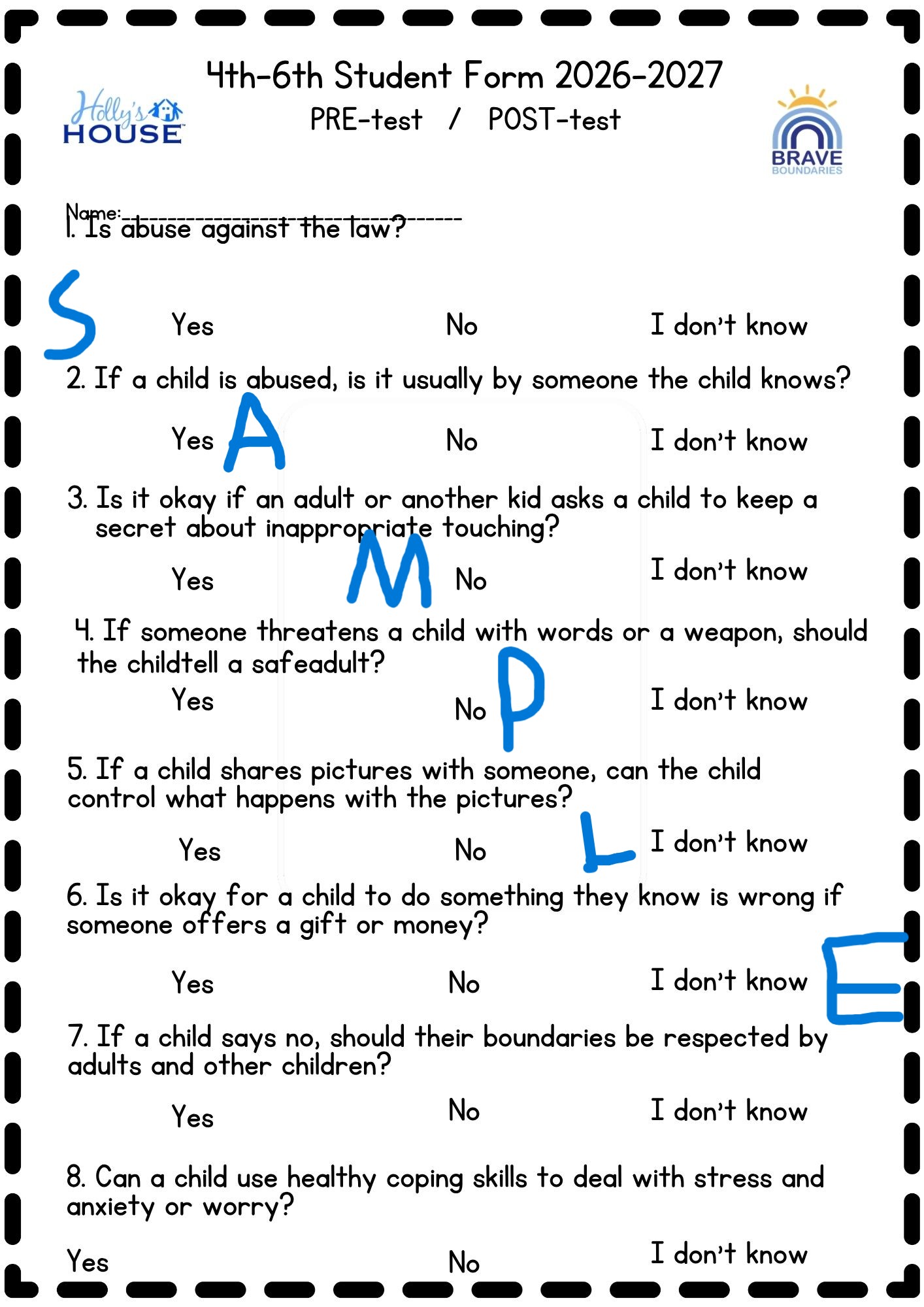
Brave Boundaries is an evidence-based prevention program. We maintain this status by giving students a pre-test assessment and a post-test assessment. Below are examples of our pre and post test assessments. These tests are property of Holly’s House and should not be printed or distributed without our expressed permission.